


Why Right Now Is the Best Time to Experience Street Food in Vietnam
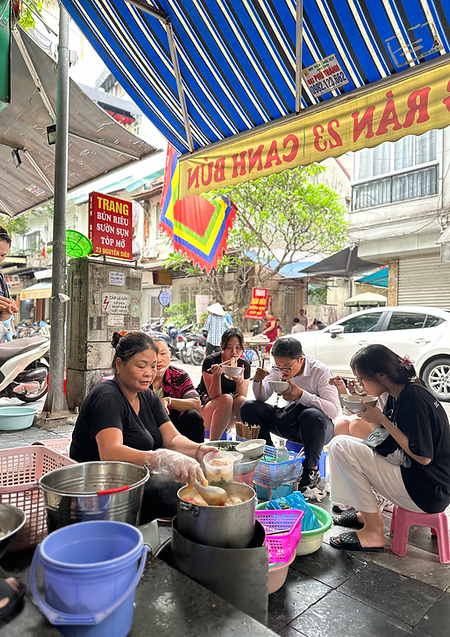
Tiny plastic stools & tables, motorbikes whizzing past, and local vendors preparing generational recipes with fresh ingredients right in front of you. This is the Vietnam that most foodies day-dream about.
Unfortunately, Vietnam’s legendary street food scene is quickly evolving and disappearing. Here's why now is the best time to experience it.
1. The Older Generation Is Aging Out
Many iconic stalls are run by cooks in their 50s, 60s, and 70s. They've curated family recipes that have been passed down decades and sometimes even generations.
But most of their children are choosing more educated and comfortable careers. When the original cook retires, the family business or street stall often retires too.
2. The Sidewalk Is No Longer Guaranteed
Sidewalk space in major cities is becoming more regulated. Urban planning, pedestrian enforcement, and infrastructure projects are reshaping how public space is used.
Street vendors depend on flexibility. When sidewalks shrink, so does opportunity. Some stalls relocate indoors. Others close entirely. The food may survive, but the street experience changes.
3. Rising Costs Are Quietly Reshaping Portions and Menus
Ingredient prices rise. Urban rent increases. Utilities go up.
Street food has always survived on thin margins and high volume. When costs climb, vendors adapt. Portions shrink. Ingredients change. Some dishes disappear because they are no longer profitable.
You may still see the same name on the sign. The bowl may not taste the same.

4. Rising Rent and Redevelopment Push Vendors Out
As cities modernize, older buildings are demolished and replaced with high rises, offices, and luxury apartments. With that transformation comes higher commercial rent and stricter property control.
Many small vendors have operated in the same spot for years, sometimes decades. When landlords renovate or sell, those vendors often lose their space. Some cannot afford the new rent. Others are simply not invited back.
The stall disappears, not because the food failed, but because the land beneath it became more valuable.
5. Hygiene Enforcement Is Raising the Bar
Food safety standards are improving. That is progress.
But compliance requires investment. Updated equipment. Permits. Renovations. Some small vendors cannot afford the transition.
Modernization improves safety, but it also narrows who can continue operating.
6. Tourism Changes The Menu
Tourism brings opportunity. It also brings pressure.
When demand increases, menus become streamlined. Presentation evolves, and authentic specialties can be simplified for volume and consistency.
The result is not fake food. It is optimized food. But optimization can slowly erode originality.
7. Younger Diners Want Comfort
Air conditioning. Clean interiors. Aesthetic design. Comfortable seating.
Vietnam’s growing middle class increasingly chooses modern cafés and restaurants. Street food is still loved, but it now competes with comfort and branding.
Consumer behavior shifts culture over time.
8. Social Media Rewards Trends, Not Always Tradition
Viral diners and dishes can pull attention away from smaller vendors who may actually serve better food and need your support to survive.
Bún Chả Hương Liên, often referred to as Obama Bun Cha in Hanoi, is a strong example. The food is widely considered average by locals, yet endless lines of tourists wait because of a single high profile moment and ongoing online visibility.
Digital attention does not always equal culinary excellence. In many cases, visibility determines survival more than flavor.
9. Right Now Is a Brief Window in Time
Vietnam will always have street food. But the raw, chaotic, deeply local version that travelers romanticize exists in a specific window of time.
Right now, you can still find grandmothers grilling over charcoal. You can still sit shoulder to shoulder with construction workers and students on the sidewalks of most major cities and towns. And you can still eat dishes that have not yet been standardized for scale.
If Vietnam’s street food is on your list, I implore you to come while the current version still exists. Come while the stools are low and the smoke is thick and the recipes are still carried in someone’s memory rather than in a franchise manual.
The window is narrowing, faster than you might think.